A backyard picnic turns an ordinary afternoon into something worth remembering, and the setup takes less effort than most people expect. No reservation, no long drive, no crowded restaurant — just a patch of grass, a blanket, and food that tastes better outside. The trick lies in planning the small details before the first sandwich gets packed: shade, seating, drinks kept cold, and a menu that survives a few hours out of the fridge. This guide walks through each step, from picking a spot on the lawn to packing up when the light turns golden.
Pick a Spot With Shade and Flat Ground
The best picnic spot starts with the ground itself. Walk the lawn the day before and look for a flat stretch without dips, tree roots, or sprinkler heads poking through the grass. Aim for a patch big enough for a blanket plus a little extra space around the edges, roughly three metres square for a group of four to six people.
Shade matters more than a pretty view. A large tree gives dappled cover that keeps food cool and guests comfortable, but remember that shade moves. A spot shaded at noon can sit in full sun by three in the afternoon, so check the same patch at the planned picnic hour. If no tree covers the area, a pop-up canopy or a large patio umbrella does the job.
Keep the spot close enough to the kitchen door for easy trips back and forth, ideally within twenty or thirty steps. Every forgotten item — extra napkins, a serving spoon, another jug of water — becomes a short walk instead of a chore. Stay clear of ant hills, wasp nests under eaves, and low spots where rainwater collects after a shower.
A Simple Menu That Travels Well
Picnic food should be easy to carry, easy to serve, and happy to sit out for an hour or two. Sandwiches and wraps lead the menu for good reason: they need no plates of their own, they travel in a single container, and everyone can pick a filling. For a group of six, plan on two sandwiches per person, with at least two filling options — chicken salad wraps and grilled vegetable and cheese sandwiches, for example.
Fruit does a lot of heavy lifting at a picnic. Grapes, strawberries, melon cubes, and orange segments need no cutting at the blanket, and they double as a refreshing side dish. A whole fruit salad in a lidded container works well too, with a squeeze of lemon over the top to keep apple and banana pieces from browning.
For sides, think sturdy rather than delicate. A pasta salad with cherry tomatoes, olives, and a light vinaigrette holds up far better than a mayonnaise-based potato salad in warm weather. Finish with something sweet and simple: brownies cut into squares or a batch of chocolate chip cookies packed in a tin.
Pack sauces and dressings in small sealed jars instead of pouring them over food at home. A soggy sandwich is the fastest way to spoil a picnic, so keep wet ingredients separate and let guests add their own.
Drinks, Ice, and Keeping Food Cool
Drinks deserve the same planning as the food. A large jug of homemade lemonade — lemons, sugar, and cold water, stirred well and chilled overnight — beats a stack of single cans for both taste and simplicity. For a group of six, plan on roughly two litres of lemonade and two litres of water, plus ice.
Cold food stays safe when it stays cold. Freeze two or three water bottles the night before and use them as ice packs inside the cooler; by late afternoon they melt into extra cold drinking water. Perishable food such as chicken sandwiches and pasta salad should spend no more than two hours outside the cooler on a warm day, and less than one hour if the temperature climbs above thirty degrees.
Serve drinks in sturdy reusable cups rather than flimsy paper ones, which collapse in a breeze and spill at the worst moment. A small tray or a shallow box keeps cups from tipping on uneven grass.

Setting Up the Blanket and the Table
Setup order makes the whole afternoon easier. Start with the ground layer: lay a waterproof tarp or an old shower curtain flat first, then place the picnic blanket on top. The tarp blocks damp grass from soaking through, which matters even on a dry day, because lawns hold morning dew longer than expected.
A low table changes the picnic from a balancing act into a proper meal. A folding camping table at knee height keeps plates level, gives drinks a stable home, and saves knees and backs during a long lunch. Put the table at the edge of the blanket, not in the middle, so nobody has to reach across a neighbour for the salt.
Set the table before guests arrive. Plates, napkins, cutlery bundles tied with string, and a small pile of wet wipes go on first, then the food containers in serving order: mains first, sides next, desserts kept in their tin until after the main course. Ten minutes of careful setup at the start saves half an hour of fussing later.
Seating and Comfort for Everyone
Comfort decides how long guests stay. Cushions make a real difference on hard ground — scatter four or five large floor cushions or folded blankets around the blanket edge, with a couple of small pillows for leaning back. Folding camp chairs help older guests and anyone with stiff knees; keep two or three nearby even if most people prefer sitting on the blanket.
Think about the youngest and oldest guests first. A small rug or a folded towel gives toddlers a clean spot to sit and play, while a chair with arms and a steady frame helps grandparents settle in without a struggle. If the group includes a baby, a shaded corner with a portable play mat keeps the little one cool and close.
A light breeze feels wonderful until it starts stealing napkins and paper plates. Small stones, clean and smooth, work as charming plate weights, and a few clips from the kitchen keep the blanket corners from flipping.
Sun, Bugs, and Small Annoyances
A little preparation keeps the small annoyances from taking over. Sunscreen should go on twenty minutes before anyone sits down, and a bottle left on the table reminds everyone to reapply after an hour or two. A wide-brimmed hat and sunglasses handle the rest.
Bugs arrive with the food, so plan for them. Mesh food covers — the umbrella-shaped tents sold for outdoor meals — keep flies off the dishes without chemicals, and they fold flat for storage. A couple of citronella candles on the table edge help in the evening, and a small fan pointed across the table can push flying insects away better than any spray.
Ants deserve a check before the blanket goes down. If a trail crosses the chosen spot, shift the blanket a metre or two and wipe the area with a damp cloth. Keep food containers closed when not in use, and avoid leaving sticky fruit or spilled juice on the blanket.
Easy Games and a Relaxed Afternoon
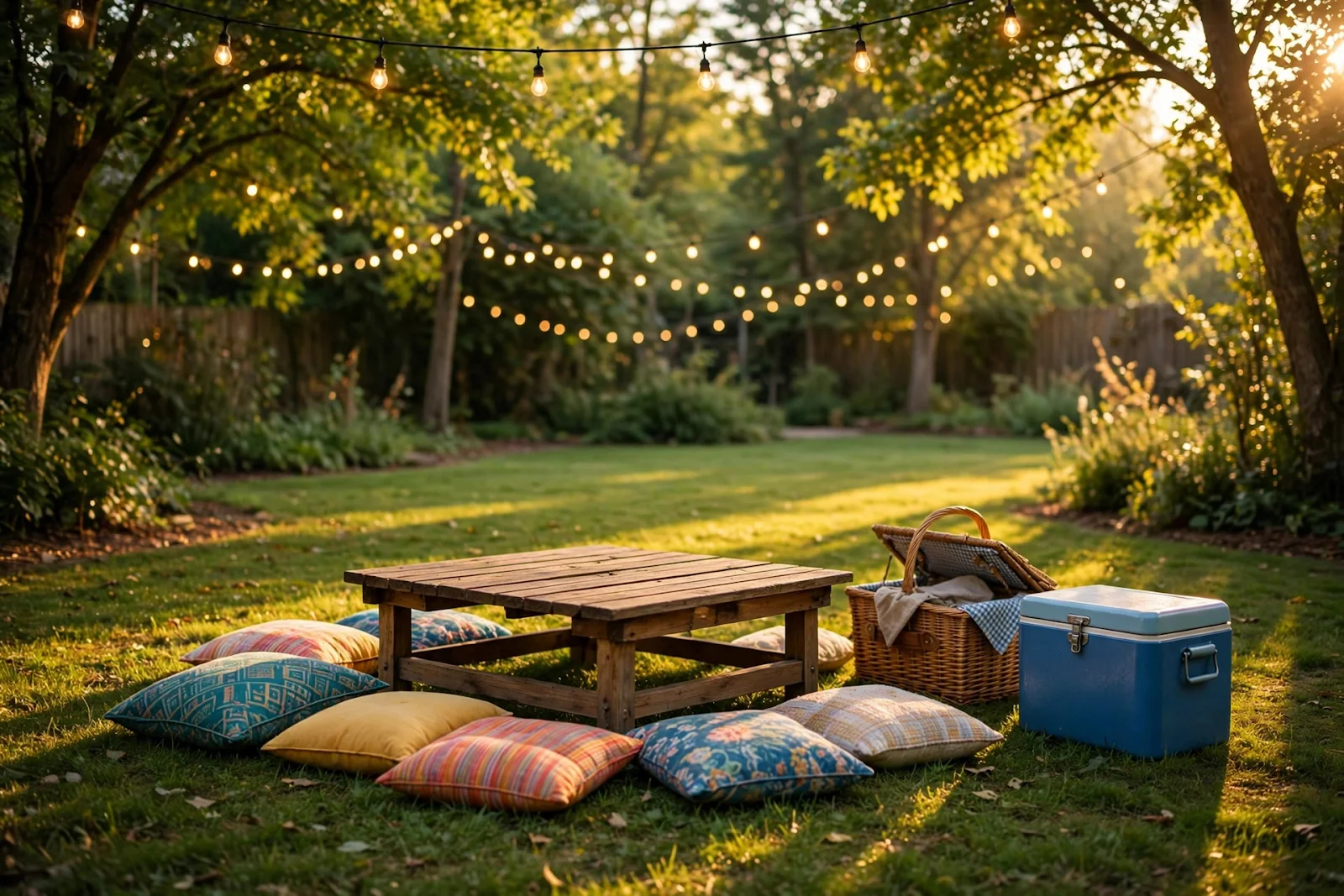
A picnic needs no entertainment schedule, but a few simple options keep the afternoon lively. A frisbee, a badminton set, or a soft ball costs little and gets everyone moving after lunch. The goal is choice, not a timetable — guests should be free to join in or simply sit and talk.
Music adds atmosphere without effort. A small portable speaker at low volume, playing a gentle playlist, fills the silences without drowning out conversation. Keep the volume low enough that nobody has to raise their voice.
Leave room for doing nothing at all. Some of the best picnic moments come from lying back on the blanket, watching clouds, and letting the afternoon drift. A picnic is a pause from the usual routine, and the schedule should feel like a suggestion rather than a plan.
Timing the Afternoon
Late afternoon is the sweet spot for a backyard picnic. Starting around three or four o'clock dodges the harsh midday heat while leaving plenty of daylight for a long, lazy meal. The sun sits lower, the shade stretches longer, and the light turns warm and golden — perfect for photos and for sitting comfortably without squinting.
Give setup about thirty minutes before guests arrive. That covers laying the tarp and blanket, setting the table, chilling the drinks, and arranging the food. Prepare as much as possible the night before: sandwiches wrapped, fruit cut, lemonade chilled, and the picnic basket packed with plates, napkins, and cutlery.
Plan for the picnic to run two to three hours. Lunch takes about an hour, games and conversation fill the second, and the third drifts toward golden hour. End the afternoon before dark so packing up happens in good light rather than by phone torch.
Packing Up Without a Mess
Packing up goes quickly when the system is set before the first plate is served. Keep a bin bag open at the edge of the blanket from the start, so rubbish goes straight in instead of piling on plates. Leftover food goes back into its containers with lids on, and anything perishable returns to the cooler with the remaining ice packs.
Shake out the blanket before folding it, and check the grass underneath for forgotten items: bottle caps, cutlery, a lost earring, a phone left on the grass. A quick sweep with a damp cloth over the low table removes crumbs and sticky spots before they dry.
A picnic kit that stays packed — blanket, tarp, cushions, mesh covers, and cutlery bundles — turns the next picnic from a project into a ten-minute decision.
A simple backyard picnic asks for little and gives back a lot: fresh air, good food, and unhurried time with the people who matter most. The blanket, the shade, the lemonade, and the low table are small things, but together they turn an ordinary lawn into a place where the afternoon slows down. Pick a day, pack the basket, and let the backyard do the rest.
A backyard picnic turns an ordinary afternoon into something worth remembering, and the setup takes less effort than most people expect. No reservation, no long drive, no crowded restaurant — just a patch of grass, a blanket, and food that tastes better outside. The trick lies in planning the small details before the first sandwich gets packed: shade, seating, drinks kept cold, and a menu that survives a few hours out of the fridge. This guide walks through each step, from picking a spot on the lawn to packing up when the light turns golden.
Pick a Spot With Shade and Flat Ground
The best picnic spot starts with the ground itself. Walk the lawn the day before and look for a flat stretch without dips, tree roots, or sprinkler heads poking through the grass. Aim for a patch big enough for a blanket plus a little extra space around the edges, roughly three metres square for a group of four to six people.
Shade matters more than a pretty view. A large tree gives dappled cover that keeps food cool and guests comfortable, but remember that shade moves. A spot shaded at noon can sit in full sun by three in the afternoon, so check the same patch at the planned picnic hour. If no tree covers the area, a pop-up canopy or a large patio umbrella does the job.
Keep the spot close enough to the kitchen door for easy trips back and forth, ideally within twenty or thirty steps. Every forgotten item — extra napkins, a serving spoon, another jug of water — becomes a short walk instead of a chore. Stay clear of ant hills, wasp nests under eaves, and low spots where rainwater collects after a shower.
A Simple Menu That Travels Well
Picnic food should be easy to carry, easy to serve, and happy to sit out for an hour or two. Sandwiches and wraps lead the menu for good reason: they need no plates of their own, they travel in a single container, and everyone can pick a filling. For a group of six, plan on two sandwiches per person, with at least two filling options — chicken salad wraps and grilled vegetable and cheese sandwiches, for example.
Fruit does a lot of heavy lifting at a picnic. Grapes, strawberries, melon cubes, and orange segments need no cutting at the blanket, and they double as a refreshing side dish. A whole fruit salad in a lidded container works well too, with a squeeze of lemon over the top to keep apple and banana pieces from browning.
For sides, think sturdy rather than delicate. A pasta salad with cherry tomatoes, olives, and a light vinaigrette holds up far better than a mayonnaise-based potato salad in warm weather. Finish with something sweet and simple: brownies cut into squares or a batch of chocolate chip cookies packed in a tin.
Pack sauces and dressings in small sealed jars instead of pouring them over food at home. A soggy sandwich is the fastest way to spoil a picnic, so keep wet ingredients separate and let guests add their own.
Drinks, Ice, and Keeping Food Cool
Drinks deserve the same planning as the food. A large jug of homemade lemonade — lemons, sugar, and cold water, stirred well and chilled overnight — beats a stack of single cans for both taste and simplicity. For a group of six, plan on roughly two litres of lemonade and two litres of water, plus ice.
Cold food stays safe when it stays cold. Freeze two or three water bottles the night before and use them as ice packs inside the cooler; by late afternoon they melt into extra cold drinking water. Perishable food such as chicken sandwiches and pasta salad should spend no more than two hours outside the cooler on a warm day, and less than one hour if the temperature climbs above thirty degrees.
Serve drinks in sturdy reusable cups rather than flimsy paper ones, which collapse in a breeze and spill at the worst moment. A small tray or a shallow box keeps cups from tipping on uneven grass.
Setting Up the Blanket and the Table
Setup order makes the whole afternoon easier. Start with the ground layer: lay a waterproof tarp or an old shower curtain flat first, then place the picnic blanket on top. The tarp blocks damp grass from soaking through, which matters even on a dry day, because lawns hold morning dew longer than expected.
A low table changes the picnic from a balancing act into a proper meal. A folding camping table at knee height keeps plates level, gives drinks a stable home, and saves knees and backs during a long lunch. Put the table at the edge of the blanket, not in the middle, so nobody has to reach across a neighbour for the salt.
Set the table before guests arrive. Plates, napkins, cutlery bundles tied with string, and a small pile of wet wipes go on first, then the food containers in serving order: mains first, sides next, desserts kept in their tin until after the main course. Ten minutes of careful setup at the start saves half an hour of fussing later.
Seating and Comfort for Everyone
Comfort decides how long guests stay. Cushions make a real difference on hard ground — scatter four or five large floor cushions or folded blankets around the blanket edge, with a couple of small pillows for leaning back. Folding camp chairs help older guests and anyone with stiff knees; keep two or three nearby even if most people prefer sitting on the blanket.
Think about the youngest and oldest guests first. A small rug or a folded towel gives toddlers a clean spot to sit and play, while a chair with arms and a steady frame helps grandparents settle in without a struggle. If the group includes a baby, a shaded corner with a portable play mat keeps the little one cool and close.
A light breeze feels wonderful until it starts stealing napkins and paper plates. Small stones, clean and smooth, work as charming plate weights, and a few clips from the kitchen keep the blanket corners from flipping.
Sun, Bugs, and Small Annoyances
A little preparation keeps the small annoyances from taking over. Sunscreen should go on twenty minutes before anyone sits down, and a bottle left on the table reminds everyone to reapply after an hour or two. A wide-brimmed hat and sunglasses handle the rest.
Bugs arrive with the food, so plan for them. Mesh food covers — the umbrella-shaped tents sold for outdoor meals — keep flies off the dishes without chemicals, and they fold flat for storage. A couple of citronella candles on the table edge help in the evening, and a small fan pointed across the table can push flying insects away better than any spray.
Ants deserve a check before the blanket goes down. If a trail crosses the chosen spot, shift the blanket a metre or two and wipe the area with a damp cloth. Keep food containers closed when not in use, and avoid leaving sticky fruit or spilled juice on the blanket.
Easy Games and a Relaxed Afternoon
A picnic needs no entertainment schedule, but a few simple options keep the afternoon lively. A frisbee, a badminton set, or a soft ball costs little and gets everyone moving after lunch. The goal is choice, not a timetable — guests should be free to join in or simply sit and talk.
Music adds atmosphere without effort. A small portable speaker at low volume, playing a gentle playlist, fills the silences without drowning out conversation. Keep the volume low enough that nobody has to raise their voice.
Leave room for doing nothing at all. Some of the best picnic moments come from lying back on the blanket, watching clouds, and letting the afternoon drift. A picnic is a pause from the usual routine, and the schedule should feel like a suggestion rather than a plan.
Timing the Afternoon
Late afternoon is the sweet spot for a backyard picnic. Starting around three or four o'clock dodges the harsh midday heat while leaving plenty of daylight for a long, lazy meal. The sun sits lower, the shade stretches longer, and the light turns warm and golden — perfect for photos and for sitting comfortably without squinting.
Give setup about thirty minutes before guests arrive. That covers laying the tarp and blanket, setting the table, chilling the drinks, and arranging the food. Prepare as much as possible the night before: sandwiches wrapped, fruit cut, lemonade chilled, and the picnic basket packed with plates, napkins, and cutlery.
Plan for the picnic to run two to three hours. Lunch takes about an hour, games and conversation fill the second, and the third drifts toward golden hour. End the afternoon before dark so packing up happens in good light rather than by phone torch.
Packing Up Without a Mess
Packing up goes quickly when the system is set before the first plate is served. Keep a bin bag open at the edge of the blanket from the start, so rubbish goes straight in instead of piling on plates. Leftover food goes back into its containers with lids on, and anything perishable returns to the cooler with the remaining ice packs.
Shake out the blanket before folding it, and check the grass underneath for forgotten items: bottle caps, cutlery, a lost earring, a phone left on the grass. A quick sweep with a damp cloth over the low table removes crumbs and sticky spots before they dry.
A picnic kit that stays packed — blanket, tarp, cushions, mesh covers, and cutlery bundles — turns the next picnic from a project into a ten-minute decision.
A simple backyard picnic asks for little and gives back a lot: fresh air, good food, and unhurried time with the people who matter most. The blanket, the shade, the lemonade, and the low table are small things, but together they turn an ordinary lawn into a place where the afternoon slows down. Pick a day, pack the basket, and let the backyard do the rest.
