Birdwatching from a window asks for almost nothing: a chair, a patch of sky, and ten unhurried minutes. No trails, no tickets, no special clothing. The birds come to the viewer, and the whole hobby can begin with any window that looks out on a tree, a shrub, or a single potted plant on a balcony. Over days and weeks, the same few visitors start to feel familiar, and the view outside slowly turns into a small daily show that rewards patience with color, song, and constant small surprises.
Why the Window Is the Perfect Starting Point
A window removes every barrier that keeps people from starting a new hobby. There is no drive to a nature reserve, no early alarm for a guided walk, and no expensive kit to buy before the first bird appears. The kitchen table, the armchair by the living room window, or a desk pushed near the glass all work just as well as any hide or observation blind. Comfort matters more than most beginners expect, because a hobby that feels easy gets repeated.
The window also frames the scene in a useful way. Instead of scanning a whole landscape, the eye settles on one feeder, one branch, or one patch of lawn. That narrow focus makes identification easier, since each bird can be watched for a full minute or two rather than glimpsed in flight. Rainy days stay enjoyable too, since the glass keeps the watcher dry while the birds carry on outside.
Choosing a Spot With the Best View
The best window faces some kind of cover: a tree, a hedge, a climbing plant, or even a tall shrub in a neighbor's garden. Birds rarely cross wide open spaces without a place to retreat, so a window facing bare concrete stays quiet far longer than one with green cover nearby. A distance of three to five metres between the glass and the nearest bush gives birds a safe escape route while keeping them close enough to see.
Morning light deserves a thought as well. An east-facing window catches the sunrise and the dawn activity that follows it, while a west-facing window glows in the late afternoon when many birds feed again before dusk. A sheer curtain helps when midday glare washes out colors. The seat itself should be comfortable enough for twenty minutes, with a small table nearby for a notebook, a field guide, and a warm drink.
Quiet helps more than gadgets. A television blaring beside the window or a dog barking at the glass will keep shy species away, while a calm room lets birds settle. Slow movement near the glass matters too, since sudden shapes still startle birds even through the glass.
A Simple Window Feeder That Actually Works
A suction-cup feeder that sticks directly to the glass puts birds within arm's reach and needs no pole, hook, or bracket. Most models hold about half a cup of seed and attach in seconds. A small tray feeder on a windowsill works just as well and suits larger birds that dislike the tight perch of a suction-cup design. Either style gives a clear, close view that a distant garden feeder never matches.
Placement decides whether the feeder gets used. Birds prefer a feeder near cover but with a clear flight path in and out, so hanging it beside a shrub rather than in the middle of a bare wall brings visitors sooner. A feeder at chest height on a ground-floor window is fine, and an upstairs feeder still attracts birds as long as a tree or roofline sits nearby.
Cleaning keeps the feeder safe and the birds healthy. A quick scrub with warm soapy water every week or two, followed by a thorough rinse and a full dry before refilling, prevents mold and stale seed from building up. Wet, clumped seed should be thrown out, since damp seed spoils fast and can make birds ill. A clean feeder gets visited far more often than a grey, sticky one.
Food That Brings Birds Back Day After Day
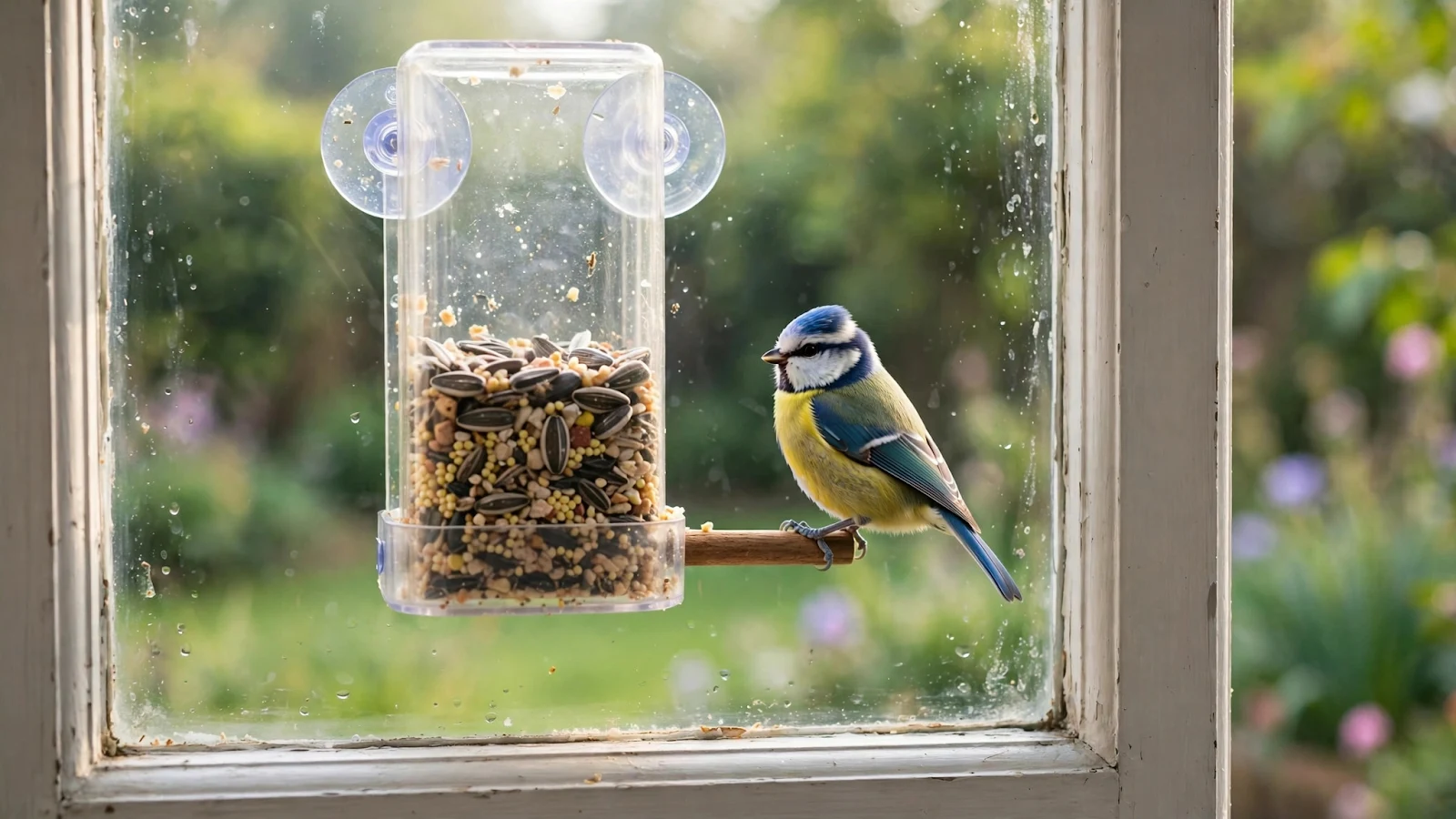
Black-oil sunflower seed is the single best starting food in most regions. Cardinals, chickadees, finches, nuthatches, and titmice all eat it eagerly, and the thin shells crack easily for small beaks. A small bag lasts a surprisingly long time when the feeder holds only a day or two of seed at a time. Nyjer seed attracts goldfinches and other small finches, while a suet block brings woodpeckers and nuthatches in colder months.
Millet scattered on a tray or a flat surface suits ground-feeding birds such as sparrows, juncos, and mourning doves. Peanuts, offered unsalted and shelled, draw in blue jays and the occasional woodpecker. Bread fills birds up without real nutrition, cheap mixes full of red milo get kicked aside uneaten, and salted snacks can harm small bodies. Plain, fresh seed always beats a bargain mix.
Consistency builds the habit on both sides of the glass. Birds learn a reliable food source within a week or two and start checking it daily. Refilling at roughly the same time each morning keeps the pattern steady. Patience matters in the first few days, since a week can pass before the first bold chickadee trusts the new feeder enough to land.
Fresh Water: The Quiet Magnet
Water attracts birds that never touch a seed feeder. Warblers, robins, and thrushes visit a shallow dish to drink and bathe even when they ignore seed entirely. A dish no deeper than about five centimetres, with a few flat stones inside for footing, gives small birds a safe place to stand. Placed near the feeder but not directly under it, the water stays cleaner.
Changing the water daily takes less than a minute and matters more than any fancy birdbath design. Stagnant water breeds mosquitoes and bacteria, while a fresh fill each morning signals safety to cautious visitors. In freezing weather, lukewarm water set out in the morning gives birds a brief drinking window, and a simple heated birdbath keeps water open all winter.
A Beginner's Pair of Binoculars
A basic pair of 8x42 binoculars covers nearly everything a window watcher needs. Eight means the bird looks eight times closer, and forty-two describes the front lens width in millimetres, which controls brightness. This combination gathers enough light for dawn and dusk viewing without weighing down the neck during a long sit. Decent starter pairs cost about the same as everyday shoes and last for years with gentle care.
Learning to focus takes one quiet afternoon. The central wheel sharpens the image, and a small diopter ring near one eyepiece adjusts for the difference between the two eyes. Once set, the diopter rarely needs touching again. Keeping the binoculars on the windowsill means they are within reach when a new bird lands, which is exactly when they are needed most.
Learning the Regulars by Sight and Sound
Most windows attract the same dozen species again and again, and learning those first makes every later identification easier. The northern cardinal stands out with a bright red body and a pointed crest, while the black-capped chickadee wears a neat black cap and calls its own name in a cheerful two-note song. Blue jays flash bold blue wings and a loud, brassy call, and the American robin, with a brick-red chest, needs little introduction.
Shape and behavior identify birds faster than color alone. A downy woodpecker hitches upward in short hops, a white-breasted nuthatch creeps headfirst down the trunk, and a mourning dove walks the ground with a soft, shuffling step. Watching how a bird moves, where it feeds, and whether it travels alone or in a flock narrows the options quickly.

Sound adds a second layer of identification that sight alone cannot match. The tufted titmouse whistles a clear two-note phrase, the house finch sings a long, warbling tune from the highest branch, and the goldfinch gives a bouncing, lilting call in flight. A free app such as Merlin Bird ID can listen for a few seconds and suggest a match, turning a mystery song into a named bird.
The Best Times of Day to Watch
Dawn brings the busiest hour of the bird day. The dawn chorus peaks in the first hour after sunrise, when birds sing to mark territory and call to mates, and the feeder sees its heaviest traffic as hungry birds refuel after the night. Sitting down with a morning drink in that first hour often reveals more species in twenty minutes than a whole lazy afternoon. Spring dawns are especially rich, with migrants passing through and resident birds at full strength.
Late afternoon brings a second, quieter rush as birds feed once more before roosting. Winter afternoons can be surprisingly lively, since short days push birds to feed hard before dark. A shower often ends with a burst of activity as birds dry off, preen, and hurry back to the feeder.
Keeping a Simple Bird Journal
A plain notebook and a pencil turn casual watching into a hobby with a memory. One line per visit is enough: the date, the species seen, a rough count, and a note about anything unusual, such as a first goldfinch of the season. Over weeks, those lines reveal patterns no single morning could show, like which birds arrive first in spring.
The journal also makes identification stick. Writing down a description of an unfamiliar bird, noting the beak shape, the wing bars, the tail length, and the song, gives the field guide something concrete to match. Checking the note against the guide later often solves the puzzle that a fleeting glimpse left open. A small sketch helps even more, because drawing forces the eye to notice details a quick look would miss.
Making the Habit Stick Without Spending Much
A regular slot in the day matters more than any purchase. Ten minutes with the morning drink, or fifteen minutes after lunch, anchors the habit to something that already happens daily. The chair stays in place, the binoculars stay on the sill, and the feeder stays full, so starting takes no effort. Habits that need setup and packing away fade fast, while habits that are always ready survive busy weeks.
Seasons keep the hobby fresh without any new spending. Spring brings migrants and nesting behavior, summer brings fledglings begging noisily at the feeder, autumn brings flocks moving through, and winter brings hardy visitors that depend on the feeder most. Each season changes the cast at the window, so the same glass never shows the same show twice.
Sharing the hobby costs nothing and deepens it. A photo sent to a friend, or a sighting logged on a free app like eBird, connects a quiet window habit to a wider community of watchers. Children often take to it instantly, since the feeder turns an ordinary window into a live nature channel. The hobby stays simple, cheap, and close to home, which is exactly why it lasts.
Starting costs almost nothing, the view changes every day, and the only requirement is a willingness to sit still for ten minutes and look. A feeder, a dish of water, and a notebook turn any window into a small observatory, and the birds, once they learn the spot is safe and the food is steady, will return morning after morning. That quiet daily visit, watched from a warm room with a hot drink in hand, is the whole reward, and it is more than enough.
