Mornings set the tone for the rest of the day, and the way the body feels in those first few minutes often decides how the hours ahead will go. Many people wake up feeling stiff or a little slow after a long night of lying still. A simple morning stretch routine can change that. It needs no gym membership, no special equipment, and no large block of time — just a few quiet minutes and a small patch of floor.
Gentle stretching is not about difficult positions or flexibility records. It is about waking the muscles slowly, encouraging blood to move, and letting the joints ease into the day. This guide covers why it helps, what is needed, how to warm up safely, and which moves work for the neck, shoulders, back, hips, and legs, plus a ten-minute sequence and tips for building the habit. Anyone with an existing condition, an injury, or pain that does not settle should check with a doctor before starting.
Why Gentle Morning Stretching Helps
After several hours of sleep, the body has been mostly still. Muscles cool down overnight, joints produce less lubricating fluid while at rest, and the spine spends hours in a fairly fixed position. That combination explains why so many people feel stiff when they first stand up. Gentle movement reverses that stillness, encouraging blood flow to muscles that have been quiet all night.
There is also a mental side. A few slow stretches create a small pause between sleep and the demands of the day. Breathing slows, the shoulders drop, and the day starts with a sense of control rather than hurry. It can also support better posture over time. The effect is gradual, and consistency matters far more than intensity. Stretching is not a cure for medical problems, though. If a stretch causes sharp pain, numbness, or tingling, stop and, if the discomfort continues, speak with a doctor.
How Long It Takes and What You Need
A good morning stretch routine takes about ten minutes — short enough to fit before breakfast or while the kettle boils. Beginners can start with five minutes and build up slowly. The goal is a routine that feels easy enough to repeat tomorrow, not one that feels like a chore. Short and regular beats long and occasional every time.
Very little equipment is needed. A yoga mat or folded blanket makes floor stretches more comfortable on hard tiles or wood. Loose clothing helps the body move freely, and a glass of water nearby is useful, since the body wakes up slightly dehydrated. Choose a spot with room to stretch the arms wide and lie down flat. A consistent spot helps, because the brain begins to link that place with a calm start. The best time is the one that fits naturally into an existing morning pattern.
Warming Up Safely Before You Stretch
Cold muscles do not enjoy sudden, deep stretches. A short warm-up comes first. Marching gently in place for a minute, rolling the shoulders in slow circles, or walking around the room a few times is enough to raise body temperature slightly and get the blood moving.
Move slowly through every stretch. Ease into each position until a gentle pull is felt, then stop there. No bouncing, jerking, or forcing — bouncing can strain cold muscles. Hold each stretch for twenty to thirty seconds, breathing normally. If the breath is held or the jaw clenches, the stretch is too intense. Most people have one side tighter than the other. Give the tighter side more time rather than pushing it harder, and use a mat if the floor is cold.
Neck and Shoulder Moves
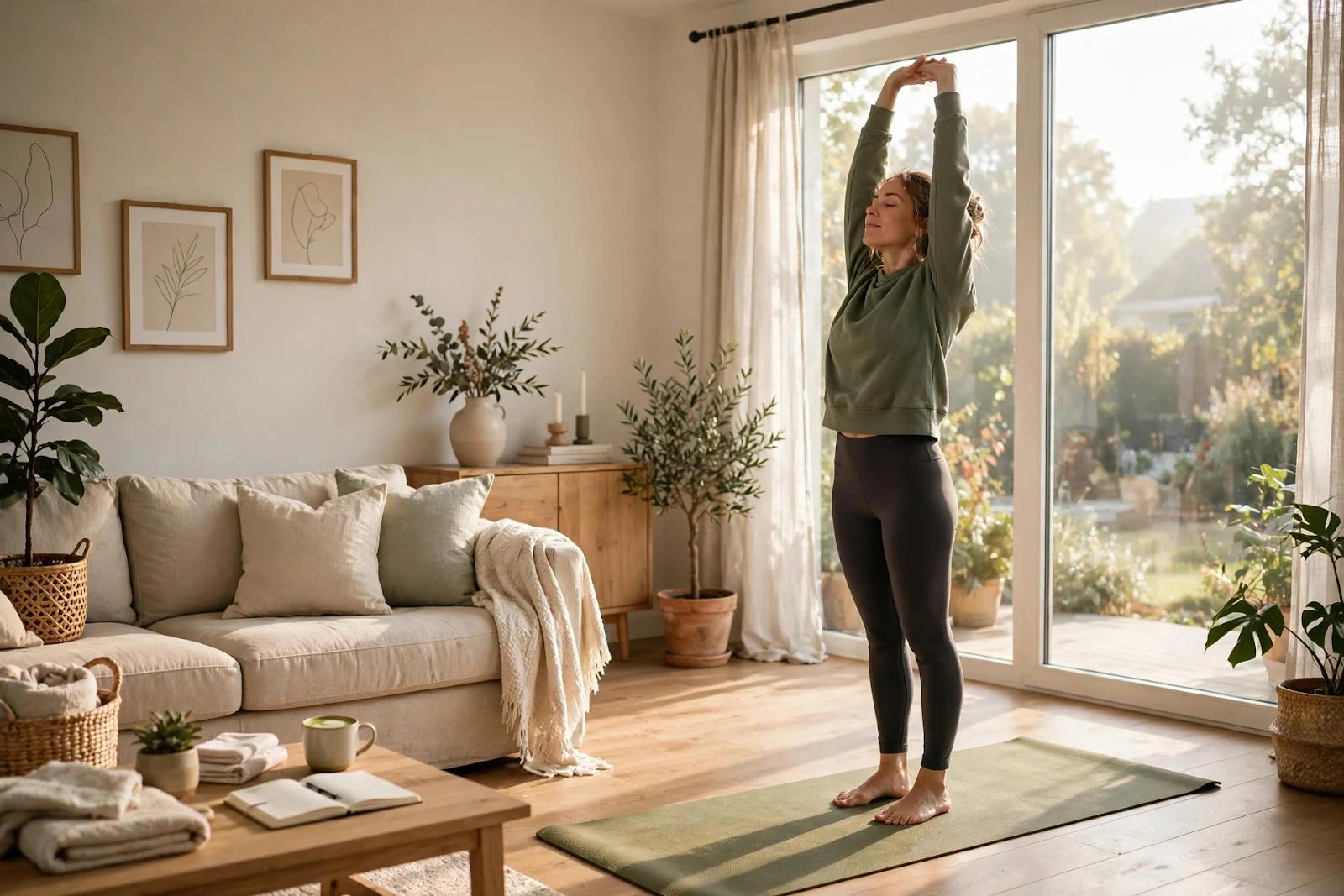
The neck and shoulders carry a lot of tension, especially for people who sit at a desk or look at screens for long hours. They also feel stiff first thing in the morning, after hours with the head in one position on a pillow. Gentle stretches here can release that tightness and set the shoulders in a more relaxed position for the day.
Start with shoulder rolls. Stand or sit tall with arms hanging loosely, and roll both shoulders forward five times, then reverse for five more. Next, lift both shoulders toward the ears, hold for a slow breath, and let them drop. Repeat three times. For the neck, tilt the head gently right, bringing the ear toward the shoulder. Hold twenty seconds, then repeat on the left. Lower the chin slightly toward the chest and hold twenty seconds. Never force the head into a position that hurts. Finish with a cross-body arm stretch: right arm across the chest, held near the elbow for twenty seconds, then switch arms.
Back and Spine Moves
The spine spends the night in a fairly fixed position, so it benefits from gentle movement in several directions each morning. The goal is to wake the muscles along the spine and let its natural curves move freely again. All of these moves should feel comfortable and controlled.
Start on hands and knees for cat-cow. On an inhale, let the belly drop and lift the head gently. On an exhale, round the spine upward, tucking the chin. Move slowly between the two positions five times. Next, sit back on the heels for a gentle child pose, arms reaching forward, forehead resting down. Hold thirty seconds. For a seated twist, sit with legs extended, bend the right knee, and place the right foot outside the left knee. Right hand behind for support, left hand outside the right knee. Twist gently right, hold twenty to thirty seconds, then switch sides. Twists should feel easy, never forced.
Hip and Leg Moves
The hips and legs work hard during the day, from walking and climbing stairs to sitting for long stretches. Overnight, the hip flexors and hamstrings can tighten, which is why the first steps of the morning sometimes feel stiff. Gentle stretches here make walking smoother and sitting more comfortable.
Begin standing for a hamstring stretch. Place the right heel on a low step or sturdy chair seat, keep the leg mostly straight, and hinge forward slightly from the hips. Hold twenty to thirty seconds, then switch legs. For the hips, try a seated figure-four stretch: cross the right ankle over the left knee and lean forward slightly from the hips. Hold twenty to thirty seconds, then switch sides. Finish with a standing quad stretch. Hold a chair for balance, bend the right knee, and bring the heel toward the buttock, holding the ankle. Hold twenty seconds, then switch sides.
A Simple Ten-Minute Sequence That Ties It Together
Putting the moves into a fixed order makes the routine much easier to follow. There is no need to decide what comes next each morning. Work through the sequence from top to bottom, about a minute per step, and the full routine takes around ten minutes.
Begin with one minute of gentle marching and shoulder rolls, then a minute of neck tilts and the shoulder drop. Move on to the cross-body arm stretch, thirty seconds per side. Come down to hands and knees for five slow rounds of cat-cow, then thirty seconds in child pose. Sit up for the spinal twist, thirty seconds per side. Stand for the hamstring stretch, thirty seconds per leg, then the quad stretch, twenty seconds per leg. Finish seated with the figure-four hip stretch, thirty seconds per side. End standing tall, arms reaching overhead, with three slow, deep breaths.
Breathing and Slowing Down

Breathing is the quiet partner of every stretch. Slow, steady breaths help the muscles relax and keep the mind focused on the present moment instead of the day ahead. Breathe in through the nose and out slowly through the mouth. No complicated technique is needed. A calm, even rhythm is enough.
Try matching the breath to the movement. In cat-cow, the inhale lifts the spine into an arch and the exhale rounds it upward. In a held stretch, each slow exhale is a chance to relax a little deeper, without forcing anything. If the breath becomes shallow or stops, ease off until breathing feels natural again. Some people finish with a minute of quiet sitting or standing, eyes closed, simply noticing the breath. It marks a clear end to the routine. Keeping the phone in another room helps too.
Building the Habit
The hardest part of a morning stretch routine is not the stretching itself. It is doing it again tomorrow, and the day after that. Habits form when a new action is attached to something that already happens every day. Stretching right after getting out of bed, after brushing teeth, or while the kettle boils all work as anchors. Pick one and use it every day.
Keeping the routine short and the space ready helps a lot. Leave the yoga mat rolled out or in an obvious spot the night before, so there is no setup in the morning. The fewer decisions the morning requires, the more likely the routine is to happen. Tracking progress helps too. A tick on a calendar is enough, and seeing a chain of completed days grow is encouraging. A single missed day does not break the chain — simply start again the next day without guilt. Perfection is not the goal. Regularity is. After a week or two, many people find their shoulders sit lower and their first steps feel easier.
Common Mistakes to Avoid
The most common mistake is stretching too hard, too fast. Morning muscles are cool and a little stiff, and forcing them into a deep stretch can cause strains or soreness that last for days. A stretch should feel like a gentle pull, never sharp pain. If it hurts, ease off at once. Flexibility improves slowly over weeks, not in a single session.
Another mistake is holding the breath. People often do it without realising it, and it creates tension — the opposite of what stretching should do. Skipping the warm-up is also common, yet even one minute of gentle movement first makes a difference. Finally, many people stretch only the areas that feel tight. The body works as a connected system: tight hips can affect the lower back, and tight shoulders can affect the neck. A balanced routine covering the neck, shoulders, spine, hips, and legs gives better results than focusing on one spot alone.
Frequently Asked Questions
How long should a morning stretch routine take? Ten minutes is a good target, and five minutes is enough to start with. Shorter is fine on busy days. It is better to do a five-minute version than to skip the routine entirely.
Is it safe to stretch every morning? Gentle stretching is safe for most healthy adults to do daily, as long as the moves stay comfortable and no stretch causes sharp pain. People with an existing injury, a medical condition, or ongoing pain should check with a doctor first, and anyone who feels numbness, tingling, or pain that does not settle should stop and seek medical advice.
What if I am not flexible at all? Flexibility is not a requirement for starting. Every stretch can be made smaller or easier. Reaching halfway toward the toes still counts, and a gentle pull is the right level of effort. Flexibility improves gradually over several weeks, and the goal is feeling more comfortable, not touching the toes.
A simple morning stretch routine is one of the smallest changes that can make a noticeable difference to how the day feels. Ten quiet minutes, a few gentle moves, and some slow breathing are all it takes to wake the body up kindly and start the day with a sense of calm. Start tomorrow morning, keep it simple, and let the habit build one day at a time.
