A small balcony can become one of the most-used corners of a home, even when it measures only a few feet in each direction. With the right seating, a thoughtful layer of plants, and lighting that works after sunset, a narrow strip of outdoor space turns into a place for morning coffee, evening reading, or a quiet pause between tasks. The trick is not to fill every inch. It is to choose fewer pieces, sized correctly, and arrange them so the space feels open rather than crowded.
Balconies come in many shapes: long and narrow, square and compact, or L-shaped with a corner that catches the breeze. Each shape calls for a slightly different layout, but the same principles apply everywhere. Start with how the space will actually be used, measure carefully, and then build up in layers — floor, seating, greenery, and light — rather than buying everything at once. A balcony that grows gradually, one good decision at a time, usually ends up more comfortable than one furnished in a single hurried shopping trip.
Measuring and Planning the Space
Before choosing any furniture, measure the balcony properly. Record the length and width, the height of the railing, and the position of the door swing, because a door that opens outward can eat into usable floor space. Note where the sun falls at different times of day, and where wind tends to funnel through. A spot that is sunny at breakfast may be shaded by late afternoon, and that changes where a chair will feel most pleasant.
Sketch a simple floor plan on paper, even a rough one, and mark the door, any drains, taps, or wall outlets. Leave a clear path of at least 45 to 60 centimetres for walking, so the balcony never feels like an obstacle course. In a very narrow balcony, this may mean placing furniture along one side only, keeping the other side free for movement. Think about what the balcony is for: a reading nook needs one comfortable chair and a small surface for a book and a drink, while a breakfast spot needs seating for two and a table that can hold plates without wobbling.
Weight matters on balconies, so check any building rules about load limits and fixed installations before adding heavy planters or stone features. Lightweight furniture and containers are usually the safer choice, and they are easier to move when the layout needs adjusting. Planning first also prevents the most common small-balcony mistake: a chair or table that looks compact in a shop but blocks the door or leaves no room to pull the chair out once it is home.
Seating That Fits
Seating sets the tone of a small balcony, so it deserves the most attention. A single lounge chair with a small footrest can be more inviting than a cramped two-seater sofa that leaves no room for anything else. Folding bistro chairs are a practical classic for narrow spaces: they tuck away when not in use, they are light enough to move with one hand, and a pair of them with a small round table creates an instant cafe corner. For a wider balcony, a compact loveseat or a corner bench built to fit the exact dimensions can use an awkward corner far better than freestanding chairs.
Look for furniture with slim profiles and open frames, since solid, bulky pieces make a small space feel closed in. Metal or rattan-effect chairs with narrow legs keep sightlines open to the floor, which helps the balcony feel larger. A hanging chair is tempting, but it needs secure ceiling support and generous swing clearance, so it only suits balconies with a strong fixing point and enough depth. When in doubt, choose the smaller option and test the layout for a few days before adding anything else.
Comfort comes from cushions and support, not size. A well-shaped chair with a seat cushion, a lumbar cushion, and a throw for cooler evenings will be used far more than a stylish but hard seat. Choose outdoor-rated cushion covers that resist fading and can be removed for washing, and store them indoors during heavy rain. A small side table, stool, or wall-mounted fold-down table gives a place for a mug or a book without taking up floor space permanently, and fold-down tables are especially useful on the narrowest balconies.

Plants and Greenery
Plants are what turn a bare balcony into a cozy outdoor corner. They soften hard edges, add colour through the seasons, and give a sense of privacy without blocking light the way a solid screen would. Start with the conditions: how much direct sun the balcony receives, how exposed it is to wind, and how much time is realistically available for watering. A sunny, windy balcony suits hardy herbs and Mediterranean plants, while a shaded balcony is better for ferns, hostas in pots, and trailing ivy.
Use height to create interest without crowding the floor. Tall planters in corners, railing planters, wall-mounted pockets, and a small tiered plant stand all add greenery at different levels. Trailing plants such as trailing rosemary, string of pearls in a hanging pot, or ivy spilling from a railing box draw the eye upward and make the space feel lush. Group pots in odd numbers and vary their heights rather than lining up identical containers in a row, which tends to look flat and formal.
Herbs earn their place on a small balcony twice over, because they look good and they are useful in the kitchen. Basil, mint, parsley, chives, and rosemary all grow well in pots, and mint should always have its own container since it spreads aggressively. For colour, geraniums, petunias, marigolds, and lavender give long flowering seasons in sunny spots, while begonias and fuchsias handle shade. Watering needs care in containers, because pots dry out faster than garden beds: check the soil with a finger before watering, use pots with drainage holes, and empty saucers so roots do not sit in standing water.
Lighting for Evenings
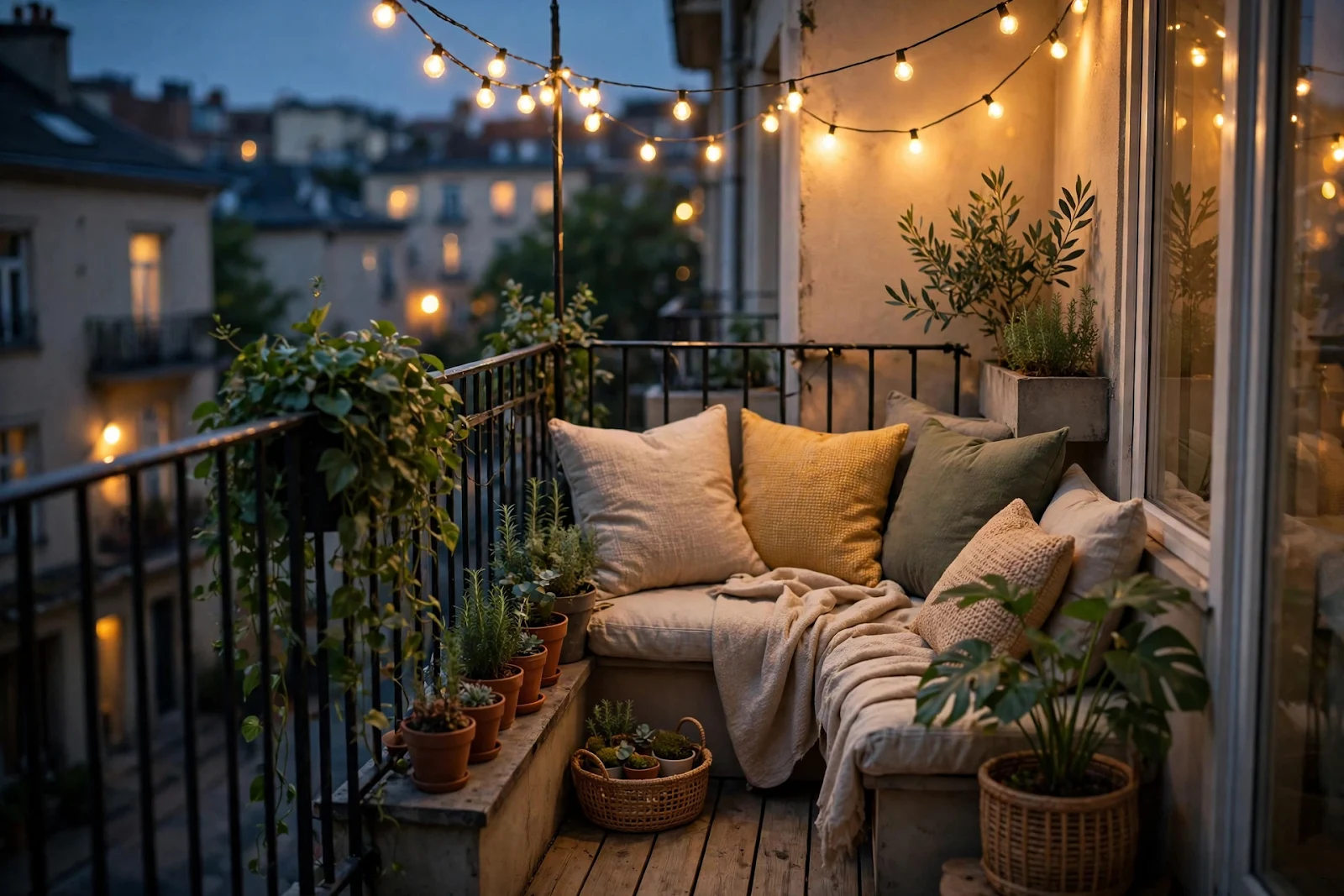
Good lighting is what makes a balcony usable after sunset, and it does not require complicated wiring. Warm-white light, around 2700 kelvin, feels relaxing and flattering in the evening, while harsh cool-white light can make a cozy corner feel like a car park. String lights are the simplest starting point: drape them along the railing, across a wall, or overhead if there is a fixing point, and choose outdoor-rated sets with a warm glow. Solar-powered string lights work well where there is no outdoor outlet, though they shine brightest after a sunny day.
Layer the light instead of relying on a single bright source. A lantern with a candle-style LED, a small table lamp rated for outdoor use, and a string of lights together create depth and soft pools of light rather than one flat glare. Battery-operated candles inside lanterns are a safe alternative to real flames, especially where cushions and plants are close by. If the balcony has an outdoor outlet, a plug-in lamp with a dimmer gives the most control, and a timer or smart plug means the lights can switch on automatically at dusk.
Storage and Weather-Proofing
Small balconies stay pleasant only when clutter has somewhere to go. A bench with built-in storage solves two problems at once: it provides seating and a dry place for cushions, watering cans, and small tools. Wall-mounted hooks hold a watering can, a pair of secateurs, or a lantern without using floor space, and a narrow outdoor cabinet can hide cleaning supplies and spare pots. Keep storage weatherproof and ventilated, since sealed boxes can trap damp and damage cushions over time.
Weather-proofing starts with materials. Powder-coated metal, treated wood, and synthetic rattan all stand up to rain far better than untreated timber or indoor-only fabrics. Cover furniture during long wet spells, or bring cushions inside when heavy rain is forecast. An outdoor rug made from recycled plastic or polypropylene adds warmth underfoot, defines the seating zone, and can be hosed clean, but it should be lifted and dried underneath after wet weather so moisture does not sit against the floor.
Wind is the other force to plan for on balconies, especially on higher floors. Lightweight pots can topple, so use heavier containers at exposed edges or secure them to the railing. A windbreak made from a trellis with climbing plants, a woven screen, or a fabric panel softens gusts while keeping airflow, and it doubles as a privacy screen. Check fixings regularly, particularly after storms, and avoid hanging anything heavy from railings unless the building rules clearly allow it.
Seasonal Touches
A balcony that changes a little with the seasons feels fresh all year without a full redesign. In spring, refresh pots with new compost, sow fast-growing herbs, and add early colour with pansies or primulas. Summer is the time for shade: a small parasol, a shade sail, or a climbing plant on a trellis can make a sun-baked balcony comfortable at midday, and a shallow bowl of water gives birds a place to drink on hot days. Lightweight throws and breathable cushion covers suit warm evenings better than heavy fabrics.
Autumn calls for warmer layers: thicker throws, a windproof lantern, and late-flowering plants such as asters or ornamental grasses that catch the low light beautifully. In winter, evergreen plants keep the balcony from looking bare — boxwood in pots, winter heather, and hardy ivy all hold their shape through cold months. Protect tender plants by moving them near a sheltered wall or indoors on frosty nights, and raise pots slightly off the ground so cold water does not pool beneath them.
Frequently Asked Questions
How do you make a very narrow balcony feel less cramped? Keep furniture to one side, choose slim and open-framed pieces, use vertical planting on walls and railings, and leave a clear walking path. A light-coloured rug and a mirror rated for outdoor use can also help the space feel wider, but the biggest difference comes from owning less and choosing each piece carefully.
What plants are easiest for a beginner on a small balcony? Hardy herbs such as mint, rosemary, and chives, plus geraniums in sun or ferns in shade, are forgiving choices. They tolerate occasional missed watering better than delicate flowering plants, and they give visible results quickly, which makes balcony gardening encouraging rather than frustrating.
Can a small balcony be comfortable in winter? Yes, with evergreen plants, warm throws, wind protection, and a lantern or string lights for atmosphere. Shorter winter visits — a morning coffee wrapped in a blanket, or a few minutes of fresh air with a hot drink — are realistic and enjoyable, even when the balcony is not used for long evenings as it is in summer.
What is the simplest way to start? Measure the space, buy one comfortable chair and a small table, add three or four pots in varied heights, and hang one string of warm lights. Live with that arrangement for a few weeks, notice what is missing, and then add one thing at a time. A small balcony styled slowly, around real habits, becomes a cozy outdoor corner that gets used every day.
